7 Warning Signs of Peripheral Artery Disease You Should Never Ignore
Peripheral Artery Disease (PAD) is a common yet frequently misdiagnosed circulatory condition. It occurs when arteries narrowed by fatty deposits (atherosclerosis) restrict blood flow to the limbs—most commonly the legs and feet. Beyond affecting mobility, untreated PAD is a critical warning sign of systemic cardiovascular issues and can drastically elevate the risk of limb amputations if left unmanaged.
For patients seeking advanced Peripheral Artery Disease treatment in Delhi, early intervention by a vascular specialist is vital. Dr. Tapish Sahu, Associate Director & Head of Vascular & Endovascular Surgery at Max Smart Super Speciality Hospital (Saket, New Delhi), specializes in limb-salvage protocols and advanced, minimally invasive endovascular techniques designed to restore healthy circulation.
What is Peripheral Artery Disease (PAD)?
Peripheral Artery Disease is the progressive narrowing or occlusion of the arteries that supply oxygen-rich blood to the lower extremities. When muscle tissues are deprived of adequate oxygen during physical exertion, it triggers ischemic pain and tissue degradation. While primarily affecting the legs, PAD can also impact arterial pathways in the arms.
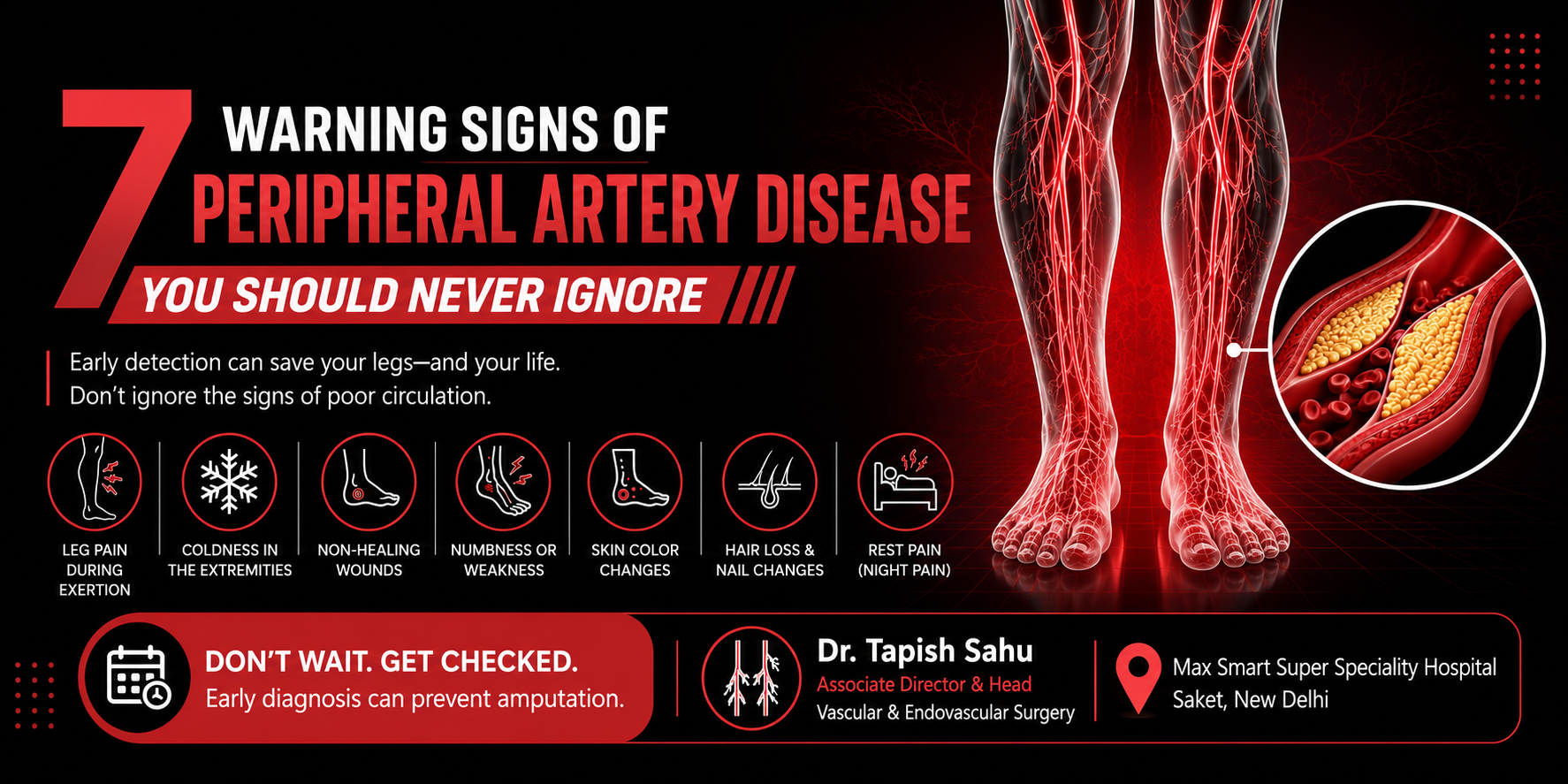
7 Warning Signs of Peripheral Artery Disease
Many individuals mistake the early indicators of poor circulation for standard signs of aging or mild arthritis. Recognizing these seven symptoms early can protect your mobility and save your life.
1. Intermittent Claudication (Leg Pain During Exertion)
The classic early symptom of PAD is cramping, aching, or fatigue in the calves, thighs, or buttocks during physical activities like walking or climbing stairs. This pain typically subsides completely after a few minutes of rest as muscle oxygen demand drops.
2. Unilateral Coldness in the Extremities
If one leg or foot feels consistently colder to the touch than the other, it indicates an asymmetrical blood flow deficit. Blocked arterial pathways prevent standard body heat from reaching the lower limb.
3. Non-Healing Foot Ulcers and Wounds
Minor cuts, blisters, or sores on the feet or toes that take weeks to heal—or fail to heal entirely—signal severe circulatory compromise.
Critical Note for Diabetic Patients: Poor circulation combined with neuropathy makes diabetic patients highly susceptible to rapidly progressing infections, gangrene, and subsequent amputation. Immediate clinical intervention is mandatory.
4. Lower Limb Numbness or Weakness
A distinct feeling of heaviness, numbness, or tingling in the legs can occur when nerves and muscles do not receive sufficient oxygenated blood. You may experience unexplained weakness or instability while walking.
5. Skin Color and Texture Alterations
Decreased blood flow visibly changes the appearance of the affected leg. Look out for skin that appears:
- Unusually pale or cyanotic (bluish tint)
- Shiny, stretched, or tightly bound
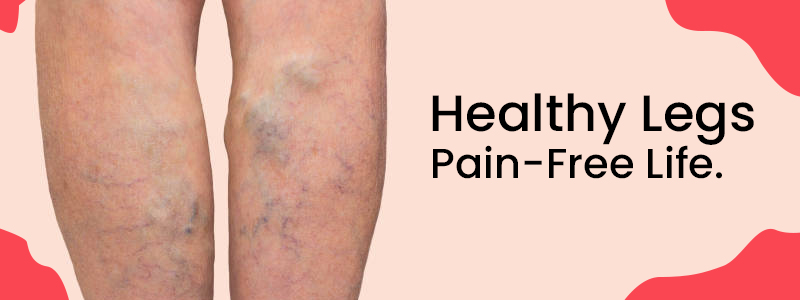
- Darker, hyperpigmented, or purplish when sitting down
6. Localized Hair Loss and Stunted Nail Growth
As peripheral perfusion drops, hair follicles and nail beds lose nourishment. Common subtle signs include sudden hair loss on the lower legs, smooth skin textures, and thickened, slow-growing toenails.
7. Rest Pain (Critical Limb Ischemia)
As arterial blockages worsen, pain persists even when resting or lying down. This deep, burning pain frequently wakes patients up at night and is often temporarily relieved by dangling the leg over the edge of the bed. This state, known as Critical Limb Ischemia (CLI), requires emergency vascular evaluation to avoid tissue loss.
Risk Factors, Diagnosis, and Treatment Options
High-Risk Profiles
You are at an increased risk of developing PAD if you present with the following factors:
- Active or historical tobacco use
- Diabetes mellitus
- Chronic hypertension (high blood pressure)
- Hypercholesterolemia (high cholesterol)
- Age 50 or older
- Sedentary lifestyle or obesity
- Family history of peripheral vascular or cardiovascular disease
Comprehensive Diagnostic Protocols
To map arterial blockages accurately, Dr. Tapish Sahu utilizes a specialized vascular diagnostic framework:
- Ankle-Brachial Index (ABI): Compares blood pressure in the ankle against the arm to detect systemic drops.
- Color Doppler Ultrasound: Non-invasively visualizes real-time blood flow velocities and localized blockages.
- CT & MR Angiography: Advanced imaging providing high-resolution 3D maps of the arterial tree.
- Digital Subtraction Angiography (DSA): The gold standard for real-time visualization, often used alongside active interventions.
Advanced PAD Treatment Options
Effective treatment scales with disease progression, focusing heavily on preventing major adverse limb events.
- Targeted Medical Management: Administration of antiplatelet therapies, lipid-lowering agents (statins), and specialized medications to increase pain-free walking distances.
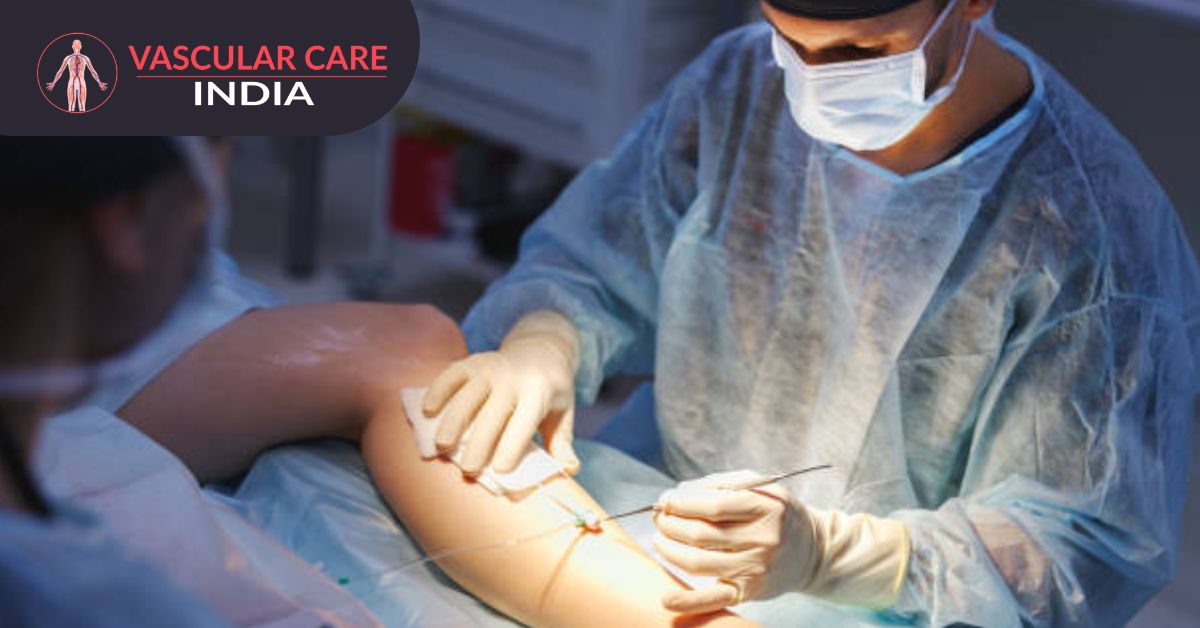
- Minimally Invasive Endovascular Interventions: Many patients can be treated with minimal recovery time using techniques like:
- Balloon Angioplasty: Widening the narrowed artery using a specialized catheter.
- Stent Placement: Deploying a tiny mesh tube to keep the artery permanently open.
- Atherectomy: Employing advanced tools to safely shave away hardened plaque inside the vessel.
- Surgical Bypass Grafting: For complex, long-segment occlusions where open vascular surgery is required to reroute blood flow around the blockage.
Frequently Asked Questions
Is Peripheral Artery Disease completely curable?
PAD is a chronic condition driven by atherosclerosis. While it cannot be entirely “cured,” it can be highly effectively managed, halted, or reversed in severity using a combination of targeted lifestyle changes, medical management, and endovascular procedures.
How can you differentiate between PAD leg pain and sciatica?
PAD pain (claudication) is strictly tied to physical exertion and resolves rapidly with rest. Sciatica or nerve compression typically causes a sharp, radiating pain down the back of the leg that persists regardless of walking or resting, and is often aggravated by specific sitting or bending postures. A professional vascular evaluation is required to differentiate the two conclusively.
What are the long-term consequences of leaving PAD untreated?
Ignoring the warning signs of PAD can lead to irreversible tissue necrosis (gangrene), non-healing arterial ulcers, and mandatory limb amputation.
Why Choose Dr. Tapish Sahu for Vascular Care in Delhi?
As a leading voice in vascular and endovascular surgery, Dr. Tapish Sahu combines clinical expertise with advanced technical infrastructure at Max Smart Super Speciality Hospital, Saket. His practice prioritizes limb salvage, patient-first minimally invasive treatments, and comprehensive post-procedure rehabilitation protocols.
Take Control of Your Circulatory Health
Do not dismiss persistent leg discomfort or cold feet as a normal part of aging. Early diagnostic screening can prevent severe complications and safeguard your independent mobility.
If you or a loved one are experiencing the warning signs of poor circulation, book a consultation with Dr. Tapish Sahu in New Delhi today for a definitive vascular assessment.